
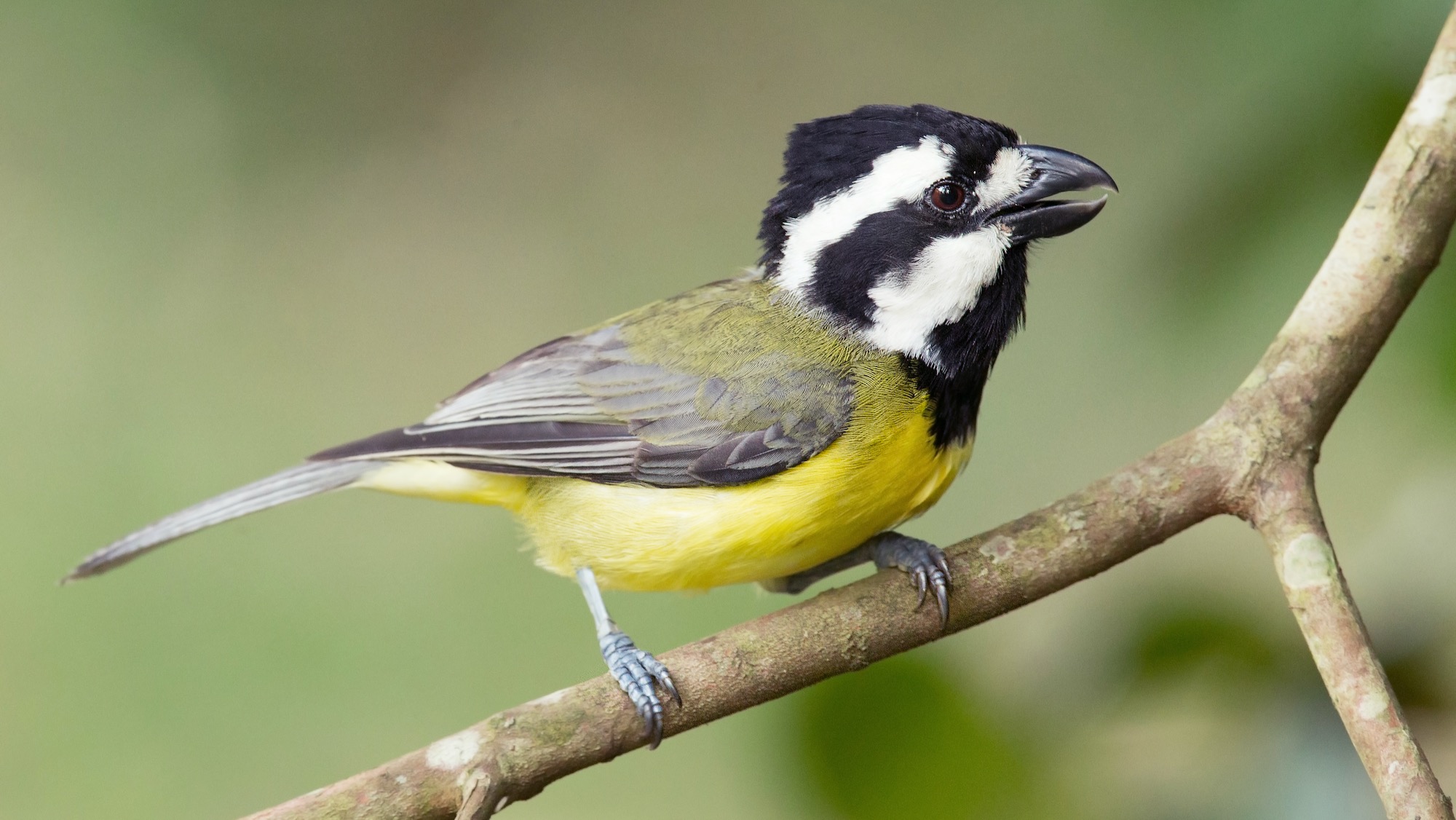
This striking little black, white and yellow insectivore was once common in the Mount Lofty Ranges, but loss of its favoured habitat has rendered it endangered. We’ve adopted this tenacious little bird as our emblem and are working to support its recovery.
The Crested Shrike Tit (Falcunculus frontatus) represents a significant conservation concern in this region, with local populations experiencing alarming declines over recent decades. This distinctive woodland bird, once relatively common throughout the Mount Lofty Ranges, now holds endangered species status in South Australia, making each sighting a noteworthy event for local bird enthusiasts.
The New Springs Landcare Group has embarked on a vital conservation initiative to save the Crested Shrike Tit (Falcunculus frontatus), a distinctive Australian bird facing serious population decline since the 1980s. According to the South Australian Department of Environment, this decline is primarily attributed to habitat loss, with bushfires devastating the mature hollow-bearing trees these birds depend on for nesting and foraging.
Project Implementation
This collaborative effort between dedicated New Springs members and the Hills and Fleurieu Landscape Board focuses on strategic revegetation, particularly the reestablishment of hundreds of red gums (Eucalyptus camaldulensis) along creek lines and between water bodies. These plantings create crucial habitat corridors that allow the birds to move safely across the landscape while providing future nesting sites.
Ecological Significance
The Crested Shrike Tit, known for its striking black and white facial pattern and yellow underparts, plays an important ecological role by controlling insect populations as it forages beneath bark. By restoring its preferred woodland habitat, the project not only aims to boost shrike tit numbers but also enhances overall biodiversity and ecosystem health in the region. This initiative represents a community-driven approach to conservation, addressing urgent environmental challenges through practical, long-term

Leave A Comment